CMMC 2.0 compliance is now mandatory for defense contractors bidding on Department of Defense (DoD) contracts. Starting November 10, 2025, CMMC requirements began appearing in solicitations, and full implementation is planned by 2028. Compliance can be expensive, but with the right approach, you can meet these requirements without overspending.
Here’s how to tackle CMMC 2.0 compliance efficiently:
- Identify your required CMMC level: Level 1 (15 practices for basic safeguarding), Level 2 (110 NIST SP 800-171 controls for Controlled Unclassified Information), or Level 3 (additional advanced controls).
- Plan around deadlines: CMMC requirements roll out in phases, with third-party audits for Level 2 starting in 2026.
- Run a gap assessment: Use free tools and focus only on systems handling sensitive data to reduce costs.
- Prioritize fixes: Address high-risk, low-cost controls like multi-factor authentication and software updates first.
- Leverage affordable tools: Automate evidence collection and compliance tracking to save time and money.
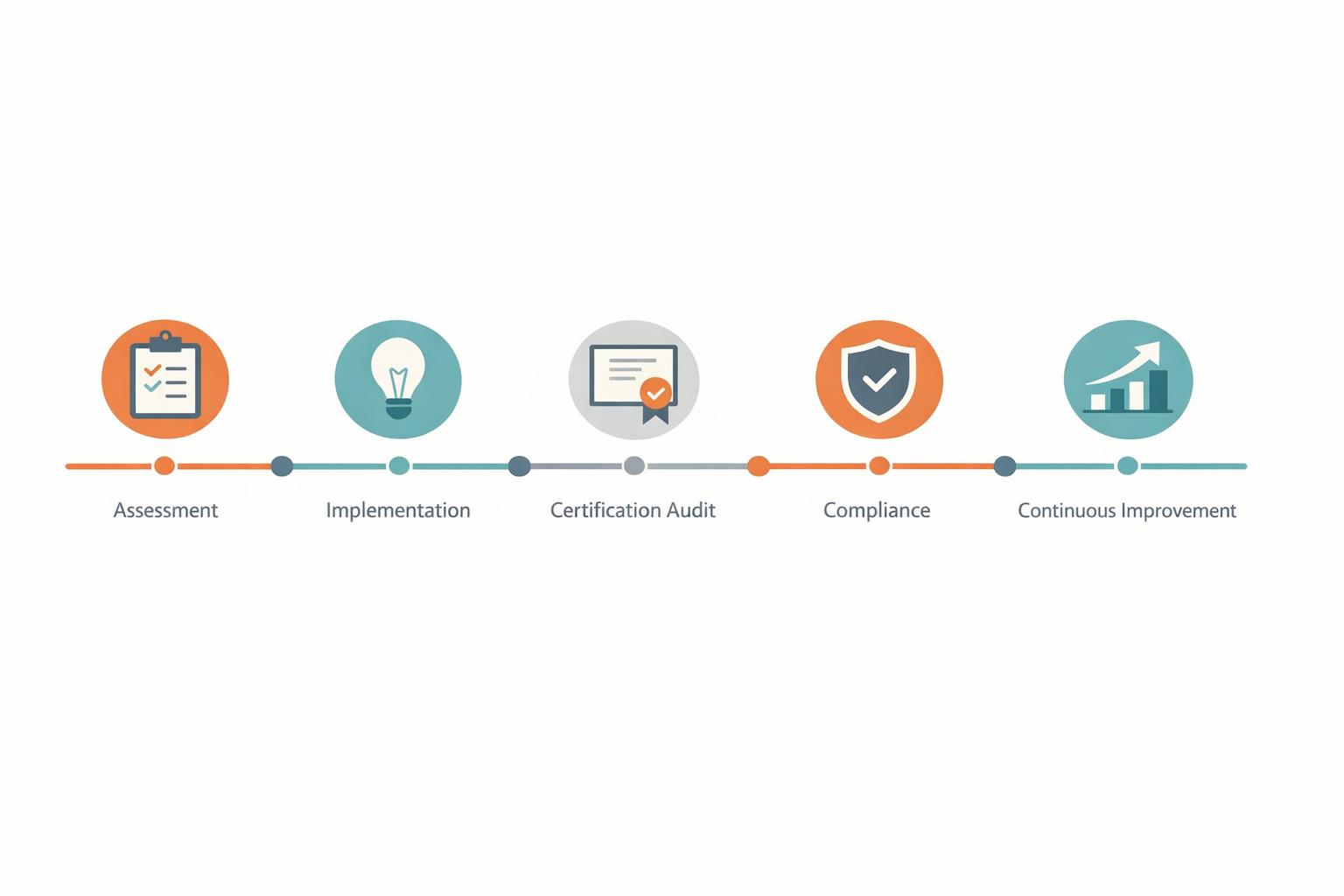
- Prepare for audits: Organize documentation, conduct mock assessments, and schedule certification early.
Step 1: Identify Your CMMC 2.0 Level and Set Your Timeline

CMMC 2.0 Implementation Timeline and Phases 2025-2028
Determine Which CMMC Level Applies to You
Your required CMMC level depends on the type of information your organization handles. If your work involves Federal Contract Information (FCI) - such as basic contract details like pricing or delivery schedules - you’ll need to meet Level 1. This level includes 15 basic safeguarding requirements aligned with FAR 52.204-21. However, if your work involves Controlled Unclassified Information (CUI) - like technical drawings, specifications, or other sensitive Department of Defense (DoD) data - you’ll need to comply with Level 2. This requires implementing all 110 security controls outlined in NIST SP 800-171.
For organizations working on the most sensitive DoD programs (fewer than 1% of contractors), Level 3 applies. This level builds on NIST SP 800-171 by adding extra controls from NIST SP 800-172.
To figure out your level, start by reviewing your current and upcoming contracts. FAR 52.204-21 typically indicates Level 1 requirements, while DFARS 252.204-7012 points to Level 2. Audit your internal systems to determine if you store, process, or transmit FCI or CUI. Statistically, about 63% of contracts fall under Level 1, while 37% require Level 2 compliance.
Once you’ve identified your level, plan your compliance efforts around your contract deadlines.
Match Compliance Work to Contract Deadlines
Timing is critical because CMMC is now a contractual requirement. Starting November 10, 2025, CMMC requirements began appearing in DoD solicitations. This means you must demonstrate compliance to bid on new contracts or renew existing ones. Review your contract renewal dates and upcoming task orders, then work backward to schedule your gap assessments, remediation efforts, and certification activities. Proper planning ensures your compliance aligns with contract timelines.
For Level 1, you’ll need to complete an annual self-assessment and upload your executive’s affirmation to the Supplier Performance Risk System (SPRS). For Level 2, most contractors (around 95%) will require a triennial audit by a Certified Third-Party Assessment Organization (C3PAO). A smaller percentage may qualify for self-assessments. As of November 2025, only 28.7% of organizations had completed a Level 2 assessment, and just 0.6% had achieved certification.
Know the Implementation Deadlines
CMMC requirements will roll out in four phases between 2025 and 2028. Here’s how the timeline breaks down:
- Phase 1 (starting November 10, 2025): Self-assessments for Level 1 and Level 2 will be required for new solicitations.
- Phase 2 (starting November 10, 2026): Mandatory C3PAO assessments will begin for Level 2 contracts.
- Phase 3 (starting November 10, 2027): Level 3 requirements will be introduced in high-priority solicitations.
- Phase 4 (by November 10, 2028): Full implementation across the Defense Industrial Base will be completed.
Use these deadlines to strategically plan your assessments and certifications. If your contracts don’t renew until 2027, you may have extra time to prepare - but don’t delay. Certified Third-Party Assessment Organizations are already booking up quickly, and industry readiness remains low. By aligning your efforts with the phase that impacts your contracts, you can spread out costs and ensure you meet all compliance requirements on time. Prioritize immediate self-assessments before transitioning to mandatory third-party certifications.
Step 2: Run a Budget-Friendly Gap Assessment
Compare Your Current Controls to NIST SP 800-171
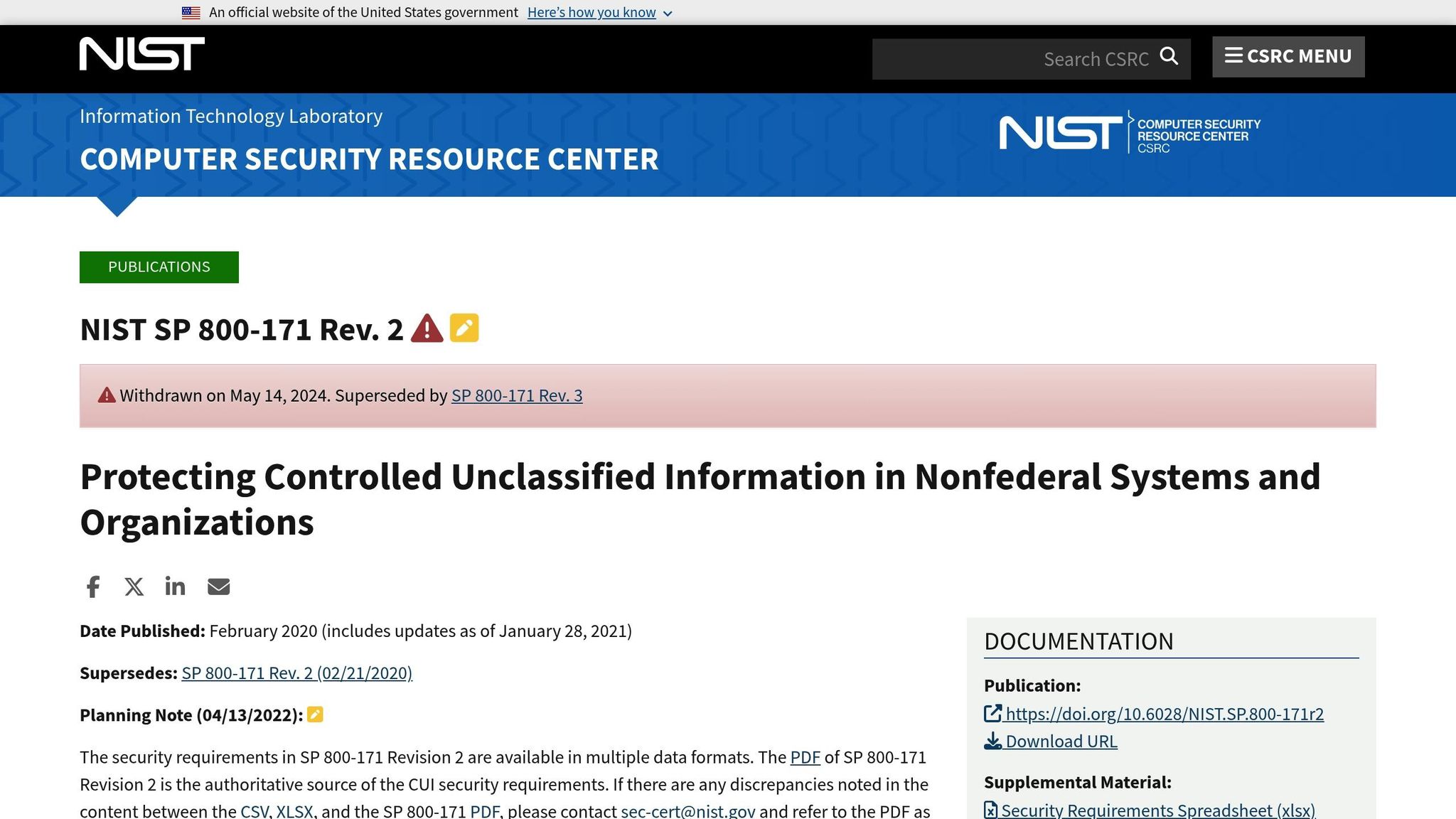
Before bringing in external consultants, take a moment to clearly define your scope. Many contractors keep costs down by using a data-centric approach that focuses only on systems handling Controlled Unclassified Information (CUI) or Federal Contract Information (FCI). This process, called scoping, is essential for narrowing down your assessment and reducing expenses.
"A significant step towards becoming NIST SP 800-171 compliant and being able to pass a CMMC assessment is understanding the scope of the CUI environment." - ComplianceForge
One helpful resource for this is the Unified Scoping Guide (USG), which is free to use. It helps categorize systems into specific zones:
- Zone 1: Systems directly handling sensitive data, like file servers or engineering workstations.
- Zone 2: Systems such as firewalls that isolate and segment your CUI environment.
- Zone 5: Systems entirely out-of-scope, with no connection to sensitive data.
To confirm a system is out-of-scope, ensure it passes the "Four Tests": it doesn’t store or process sensitive data, isn’t on the same subnet as sensitive systems, can’t connect to the CUI environment, and doesn’t affect security controls. Proper scoping can significantly reduce your assessment workload and related costs.
Once your scope is clear, compare your current controls to the 110 security requirements outlined in NIST SP 800-171 for Level 2 (or the 15 requirements for Level 1). The NIST MEP Cybersecurity Self-Assessment Handbook (NIST HB 162) is a free government resource tailored for smaller manufacturers. It provides plain-language explanations and step-by-step guidance that your team can follow without needing specialized expertise.
With a well-defined scope and a clear comparison of controls, you’ll be ready to formalize your gap assessment using readily available resources.
Use Free and Low-Cost Assessment Resources
For an initial gap assessment, free tools can go a long way. The CUI Institute offers a free Gap Assessment Tool, an Excel-based worksheet that calculates your DoD Supplier Performance Risk System (SPRS) score and helps create a System Security Plan (SSP). Built on NIST SP 800-171A objectives, this tool aligns with the criteria third-party assessors will use. While spreadsheet tools may not scale well for larger organizations, they’re an excellent starting point for smaller teams or first-time assessments.
Combine this with NIST SP 800-171A, the official document detailing specific objectives for each security requirement. By comparing your practices against these objectives, you can pinpoint missing controls or areas needing better documentation - one of the most common reasons for certification failures.
Involve Your Internal Teams
Once you’ve identified gaps, it’s time to organize your internal resources for remediation. Build a cross-functional team: IT can evaluate controls, legal can review contracts, and operations can map out data flows.
Appoint a senior executive to oversee the process and formally approve remediation efforts, as they’ll need to sign attestation letters for Level 1 or non-critical Level 2 compliance. Assign clear ownership for each identified gap to ensure accountability. Typically, a thorough Level 2 gap assessment takes 4 to 8 weeks when handled internally.
"If you fail to plan, you plan to fail' is very applicable in this scenario, so taking the time to document assets and data flows is of the utmost importance." - ComplianceForge
Have IT document network segmentation with specific details, such as firewalls or VLAN configurations, to demonstrate that non-critical systems are isolated. This step reduces both the scope and complexity of your assessment. Without proper segmentation, your entire network could fall within scope, significantly increasing costs and effort.
Step 3: Rank Controls by Risk and Cost
Rank Missing Controls by Risk Level
After completing your gap assessment, the next step is to rank the missing controls based on their risk level and cost. This involves identifying the gaps and prioritizing them according to the security risk they address and how challenging they are to implement. For instance, controls that tackle common vulnerabilities - like weak access controls or unpatched systems - should be your top priority, regardless of their placement within the NIST framework.
"Weak access controls and lazy patch practices are two of the most common ways systems get exploited, so having these controls in place reduces those risks." - Markindey Sineus, GRC Subject Matter Expert, Vanta
Start by ensuring the foundational controls, such as password policies and regular software updates, are in place. These provide a strong baseline and show immediate progress to stakeholders without requiring significant resources. Addressing these basics first helps you focus on quick wins that can immediately reduce vulnerabilities.
Start with Low-Cost, High-Impact Controls
One great example of a low-cost, high-impact control is multi-factor authentication (MFA). Most cloud platforms and software suites already include MFA at no extra charge, and enabling it across your organization can significantly reduce your risk profile.
Other affordable and impactful measures include formalizing password policies and implementing role-based access control. Automating software patching through built-in update features can also help address the Flaw Remediation control, closing a common attack vector. Additionally, basic security awareness training - such as teaching employees to recognize phishing attempts - often proves more effective than relying solely on technical fixes. This is especially critical since human error accounts for 74% of security breaches.
| Control Area | Low-Cost, High-Impact Examples |
|---|---|
| Access Control | MFA, Least Privilege, Unique User IDs |
| System Integrity | Automated Patching, Antivirus Updates |
| Awareness & Training | Phishing Simulations, Cyber Hygiene Training |
| Configuration Management | Baseline Configurations, Change Control Procedures |
Create a Roadmap for Longer-Term Fixes
For controls that require more time or resources - such as migrating to GCC High or deploying advanced monitoring tools - document them in a Plan of Action and Milestones (POA&M). This document should detail the incomplete controls, the individuals responsible for addressing them, the resources required, and the target completion dates.
"A POA&M outlines any deficiencies or incomplete practices and the plan to correct them." - Bright Defense
Under CMMC 2.0, POA&Ms are limited to certain low-weight controls and must be resolved within 180 days. If your organization achieves at least 80% compliance (equivalent to an SPRS score of 88), you may qualify for a Conditional Certificate. This allows you to maintain contract eligibility while addressing remaining gaps within six months.
To manage this process effectively, break your roadmap into quarterly phases. For example:
- Q1: Prioritize high-risk remediation.
- Q2: Focus on policies and training.
- Q3: Implement monitoring tools.
- Q4: Conduct mock assessments.
This phased approach ensures steady progress, keeps costs manageable, and helps you balance risk mitigation with budget constraints.
Step 4: Use Affordable Tools and Automation
Once you’ve ranked your controls by risk and cost, it’s time to bring in technology to simplify your compliance tasks and save time.
Choose Budget-Friendly Compliance Tools
The right compliance tools can drastically reduce the amount of manual work you need to do. When evaluating options, focus on three must-have features: automated evidence collection, AI-guided workflows, and continuous monitoring. Tools that integrate seamlessly with platforms like AWS GovCloud, Azure Government, Google Workspace, or Microsoft GCC High can automatically pull artifacts and streamline data collection processes.
Some platforms also provide pre-built CMMC-mapped policy templates, which can save you hundreds of hours in documentation. Even better, tools offering auto-generated documentation ensure that your System Security Plan (SSP) and Plan of Action and Milestones (POA&M) stay up-to-date based on your actual environment, not outdated templates. Just make sure that any tool managing Controlled Unclassified Information (CUI) has FedRAMP authorization to meet DoD standards.
Cost is another big consideration, especially for smaller contractors. Some platforms connect you with vetted C3PAO partners, with assessment costs starting as low as $15,000. Compare this to the DoD’s estimate of $104,000 to $118,000 for traditional third-party certifications. On top of that, automation platforms can slash implementation costs by 20% to 60% compared to manual, consultant-heavy approaches.
Next, let’s look at how automating evidence collection can make compliance even more efficient.
Automate Evidence Gathering and Control Testing
Collecting evidence manually is one of the most labor-intensive parts of CMMC compliance. AI-powered automation simplifies this process by continuously gathering and organizing artifacts for auditor review. With this approach, you could cut down the timeline for achieving CMMC Level 2 readiness from 12–18 months to just 4–6 months.
"One of the key ways to demonstrate compliance with documented policies is by having the controls that map to the policies showcased... showing real-time compliance and building trust." - Markindey Sineus, GRC Subject Matter Expert, Vanta
Automation also supports continuous monitoring, providing real-time dashboards that keep track of your compliance status year-round. For contractors juggling multiple certifications - like SOC 2, ISO 27001, or FedRAMP - cross-framework mapping lets you reuse evidence across standards, eliminating redundant work.
| Feature | With AI-Powered Automation | Without Automation (Manual) |
|---|---|---|
| Average Timeline (Level 2) | 4–6 months | 12–18 months |
| Cost Efficiency | 20–60% lower overhead | High consultant/manual labor costs |
| Enclave Build Time | < 30 minutes | 8–10 weeks |
| Documentation | Auto-generated SSP & POA&M | Manual spreadsheet tracking |
| Monitoring | Continuous, real-time | Point-in-time/manual checks |
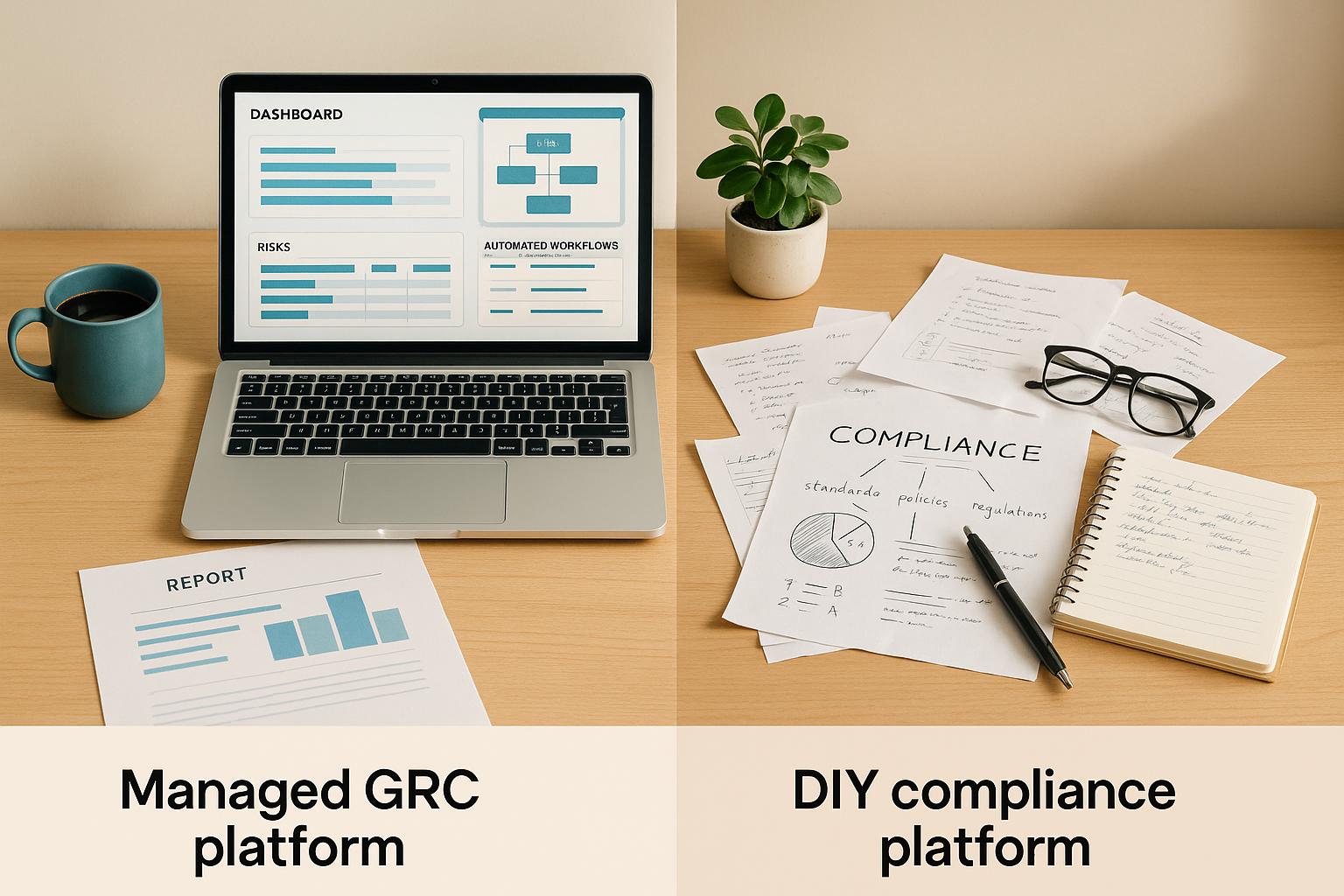
Explore Managed Compliance Services
If your team is short on security expertise or simply doesn’t have the bandwidth to manage compliance, consider managed services. These services act as an extension of your team, handling tasks like gap assessments, policy writing, evidence collection, and even auditor coordination [3,26].
Managed services combine AI-driven automation with human expertise. While AI handles repetitive tasks like evidence collection and gap identification, subject matter experts focus on strategy, risk management, and critical decision-making. This approach not only speeds up the compliance process but also reduces errors and costs - all for a fixed monthly fee. For small and medium-sized contractors, this eliminates the need to hire a full-time CISO or compliance officer while keeping your program audit-ready.
"Once a business meets Level 2 requirements, it's important to implement a robust continuous monitoring program for high-risk controls. This helps to ensure the business can maintain Level 2 compliance." - Tim Blair, Sr. Manager, GTM GRC SMEs, Vanta
Whether you opt for a platform, a managed service, or a mix of both, the goal is to automate the tedious parts of compliance. That way, your team can focus on what really matters: building great products and winning contracts - not chasing screenshots or updating spreadsheets. This strategy helps you stay efficient and within budget while meeting compliance requirements.
sbb-itb-ec1727d
Step 5: Build Audit-Ready Documentation and Evidence
Once your tools and automation are set up, the next priority is organizing the documentation and evidence auditors will need to review. Even the best controls can fall short without well-prepared, audit-ready records. As ComplianceForge aptly states: "When it comes to cybersecurity compliance, if it is not documented then it does not exist."
Gather Required Documentation
For a CMMC 2.0 assessment, you'll need three primary types of documentation: cybersecurity policies, standards, and procedures; a System Security Plan (SSP); and a Plan of Action & Milestones (POA&M). The SSP outlines system boundaries and explains how each control is implemented, while the POA&M tracks remediation efforts, typically within a 180-day timeframe. Additional documents to compile include risk assessments, asset inventories, data flow diagrams, and subcontractor security agreements.
If you’re employing network segmentation to limit the audit scope, make sure to document those details thoroughly. Without this, assessors might treat your entire corporate network as part of the audit. To save time, consider using pre-written policy templates, which can be a major time-saver. These templates typically cost between $1,980 and $10,400, depending on their complexity.
Organize Evidence for Audits
Once you've gathered the necessary documentation, the next step is structuring it for easy audit review. A zone-based approach works well for this, clearly separating systems that handle CUI, segmentation tools, security applications, and third-party contract evidence.
Your documentation should align with all 320 NIST SP 800-171A Assessment Objectives. Centralize vulnerability scans, risk assessments, and remediation logs to demonstrate "due diligence and due care" during audits. For vulnerabilities that can’t be patched immediately, document them as informed business decisions, including justifications to show the risk is being actively managed. After organizing your records, focus on maintaining them consistently.
Keep Compliance Current Year-Round
Compliance isn’t a one-and-done task. A senior official must annually affirm ongoing compliance, with these affirmations stored in the Supplier Performance Risk System (SPRS). Regular updates to your SSP and related policies not only prepare you for audits but also help control compliance costs over time. Incorporate evidence collection into daily operations to avoid last-minute scrambles. Automated tools can be invaluable here, helping you monitor sign-in activity, track inactive accounts, and generate logs for auditors.
About 25% of companies seeking certification face "false starts" due to failed pre-assessments, often because they couldn’t adequately demonstrate readiness. Internal gap assessments and staff interview preparation can significantly reduce this risk.
To simplify audits and avoid compliance pitfalls, establish regular scanning schedules, document remediation efforts, and retain assessment records for at least six years. Staying on top of your documentation not only ensures audit success but also protects against False Claims Act violations, which can lead to severe consequences like contract termination or even criminal fraud charges.
Step 6: Prepare for Third-Party Certification on Budget
Once your documentation is in place, the final step is the certification audit. According to the DoD, a Level 2 C3PAO assessment typically costs around $76,743, with total expenses, including planning and reporting, averaging $104,670. Interestingly, 70% of contractors budget less than $100,000 for this process, which makes careful planning crucial to avoid being caught off guard during the audit. Here's what you need to know about preparing for a third-party evaluation.
Know What Third-Party Audits Involve
Certified Third-Party Assessment Organizations (C3PAOs) are the only groups authorized to perform Level 2 and Level 3 audits. Their approach includes three main steps: reviewing your documentation, testing your controls, and conducting staff interviews. Preparing your team for these interviews is just as important as ensuring your technical systems meet the standards. Many contractors fail not because their systems are inadequate, but because employees struggle to clearly articulate how the controls work in real-world scenarios.
To maintain impartiality, C3PAOs are prohibited from offering both consulting and auditing services to the same client. After the audit, you’ll have a 10-day period to address minor issues before the C3PAO submits their final findings to the eMASS system. If the initial assessment doesn’t go as planned, you’ll have a 90-day remediation window to fix any security gaps without needing to restart the entire process.
Understanding these steps helps you strategically plan your certification timeline.
Schedule Certification at the Right Time
Once you understand the audit requirements, timing becomes critical. Schedule your formal C3PAO assessment 3 to 6 months before certification is required for a contract. This buffer allows time to address any findings without jeopardizing your deadlines. Over 68% of organizations report spending more than a year preparing for CMMC certification, even those with a strong NIST foundation often need 12 months or more.
To boost your chances of success, conduct a readiness assessment 4 to 6 weeks before your official certification. Organizations that validate their readiness in advance tend to achieve near-perfect first-pass rates, avoiding costly re-audits that can run an additional $40,000 to $80,000. If your self-assessment score is high (88 or above) and your Plans of Action and Milestones (POA&Ms) are acceptable, you might even consider delaying the final assessment to align with next year’s budget.
Lower Certification Expenses
Even at this stage, there are ways to trim costs while maintaining quality. One of the most effective strategies is proper scoping. By isolating Controlled Unclassified Information (CUI) within a dedicated enclave, you can reduce assessment time and C3PAO fees by 25% to 40%. Paul Miller from Virtra highlights the importance of this step:
"One of the key things you have to figure out to make you successful with CMMC is scoping. Get your scope figured out and don't include systems that are outside your scope. You're just creating more work for yourself that you don't need to do."
Using FedRAMP-certified cloud providers like AWS GovCloud or Azure Government can also save time and money. These platforms allow you to inherit physical and infrastructure controls, cutting down the number of controls you need to document and have assessed. Additionally, pre-filled templates can significantly reduce the labor involved in documentation - by as much as 60%.
Another important detail to keep in mind: CMMC certification is considered a reimbursable expense under DoD contracts. To avoid financial surprises, allocate about one-third of your anticipated recertification costs annually.
Conclusion
Achieving compliance with CMMC 2.0 doesn’t have to drain your budget or disrupt your operations. By following six key steps - identifying your level, conducting a gap assessment, prioritizing risks, using automation, creating audit-ready documentation, and preparing for certification - you can navigate the process efficiently while meeting the Department of Defense’s requirements. This structured approach provides a clear path to compliance without unnecessary expenses.
A smart strategy starts with narrowing your compliance scope. Focus on systems that handle Controlled Unclassified Information (CUI) to minimize assessment costs. As Morgan Kaplan, Director of U.S. Government Strategy & Affairs at Vanta, explains:
"By leveraging automation and continuous monitoring capabilities, we believe that software can help firms - big or small - lower the cost of achieving and verifying their compliance".
Continuous monitoring is key to staying prepared for audits. Whether you’re a smaller contractor investing roughly $50,000 to get started or a mid-sized business allocating $100,000 to $200,000 for full implementation, these tactics ensure you’re getting the most value for your investment.
For additional support, Cycore offers a hands-on approach as your fractional security team. Guided by our step-by-step process, we handle every aspect of compliance - from gap assessments and control implementation to evidence collection and audit facilitation. Our AI-powered automation and expert guidance help you stay on track without burdening your internal team. With a fixed monthly fee tailored to your technology and business needs, Cycore helps you close deals faster, reduce operational friction, and stay ready for audits at all times.
FAQs
How can defense contractors identify the appropriate CMMC 2.0 level for their business?
If you're a defense contractor, figuring out your required CMMC 2.0 level starts with understanding the type of information your organization handles. For companies that deal with Federal Contract Information (FCI), Level 1 compliance is usually the standard. On the other hand, if your work involves Controlled Unclassified Information (CUI), you'll likely need to meet Level 2 requirements.
Take a close look at your contracts to confirm whether you're working with FCI, CUI, or both. This step ensures your compliance efforts align with the correct CMMC 2.0 standards, helping you stay on track without spending more than necessary.
What are some budget-friendly strategies to prepare for CMMC 2.0 compliance?
To get ready for CMMC 2.0 compliance without breaking the bank, focus on practical steps that balance efficiency and cost. One smart move is to automate repetitive tasks like collecting evidence and mapping controls. This not only saves time but also cuts down on manual work. Another key step is conducting a detailed inventory of your systems. This helps you spot gaps and focus on the areas that need the most attention, ensuring your resources are used wisely.
If you're a smaller contractor, consider using budget-friendly compliance tools that can easily integrate with your current systems. These tools can simplify the process and help you stay on track financially. To avoid common mistakes, set clear goals, choose the right assessment level for your needs, and take advantage of templates and pre-built policies to speed up the implementation process. These strategies make it easier to meet compliance requirements without putting too much strain on your budget.
How can automation tools make CMMC 2.0 compliance easier and more efficient?
Automation tools make navigating the CMMC 2.0 compliance process much easier by cutting down on manual tasks, reducing errors, and saving precious time. These tools can automatically map controls, pinpoint gaps, and gather evidence, allowing contractors to stay compliant without stretching their resources too thin.
They also work seamlessly with platforms like AWS GovCloud or Azure Government, enabling real-time compliance monitoring to ensure your cybersecurity measures are always current. On top of that, automation platforms can create and update essential documents - like System Security Plans (SSPs) and Plans of Action & Milestones (POA&Ms) - streamlining audits and assessments.
For small and medium-sized contractors, automation offers an efficient and cost-effective way to meet regulatory demands without breaking the bank.