How Long Does ISO 42001 Certification Take? Cost, Timeline & Requirements FAQ


ISO 42001 certification, which focuses on managing AI systems responsibly, typically takes 4 to 12 months depending on your organization's size, readiness, and resources. Smaller businesses may complete it in as little as 3–4 months, while larger organizations often take closer to a year. Costs for certification range from $4,000 to $20,000+, with additional ongoing expenses for annual audits.
Key Points:
To save time and reduce effort, organizations can leverage automation tools and streamline processes if they already comply with related standards like ISO 27001. Certification not only demonstrates accountability but also aligns with growing regulatory demands like the EU AI Act.
How Long Does ISO 42001 Certification Take?
Certification Process Phases and Timeframes
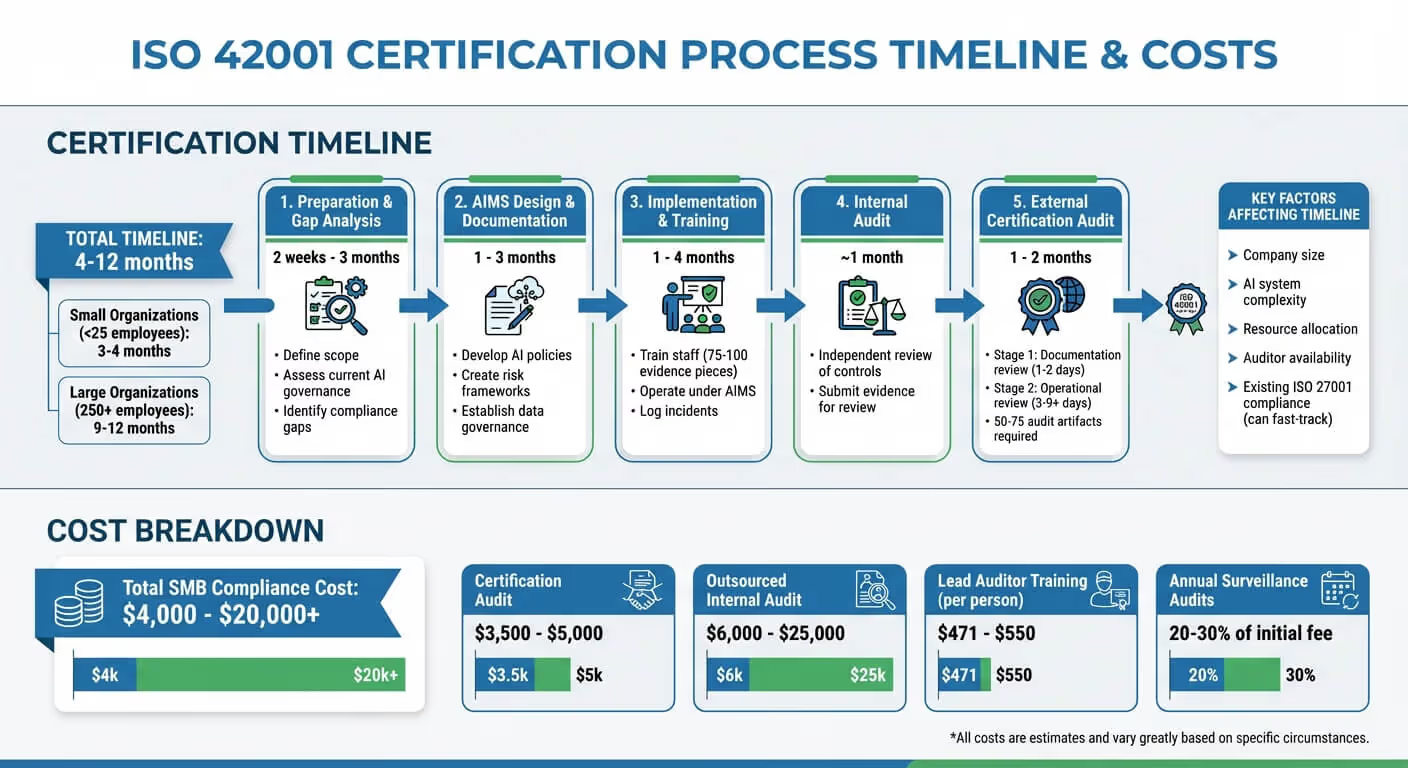
The journey to ISO 42001 certification typically takes between 4 and 12 months, depending on your organization’s size and how prepared you are. The process is divided into five key phases, each with its own timeline and activities.
The first phase is preparation and gap analysis, lasting anywhere from 2 weeks to 3 months. This step involves defining the certification scope, assessing your current AI governance practices, and pinpointing areas that need improvement.
Next comes the AIMS design and documentation phase, which generally takes 1 to 3 months. During this stage, you’ll set up your AI Management System (AIMS), create policies, and establish risk management protocols.
The third phase is implementation and training, which spans 1 to 4 months. This is when you train your team, start running operations under the new system, and document how well the controls are working.
After that is the internal audit phase, which takes about a month. During this step, you’ll submit 75–100 pieces of evidence for an independent review of your controls.
Finally, the external certification audit lasts 1 to 2 months and includes two stages. Stage 1 focuses on reviewing documentation and takes 1–2 days, while Stage 2 is an operational review lasting 3–9+ days. These stages are typically spaced 4–12 weeks apart, with a maximum gap of 6 months. For Stage 2, you may need to provide 50–75 audit artifacts.
Certification Phase
Duration
Key Activities
Preparation & Gap Analysis
2 weeks – 3 months
Define scope, secure stakeholder buy-in, identify compliance gaps
AIMS Design & Documentation
1 – 3 months
Develop AI policies, risk frameworks, and data governance
Implementation & Training
1 – 4 months
Train staff, operate under AIMS, log incidents
Internal Audit
~1 month
Independent review of controls and evidence
External Audit (Stage 1 & 2)
1 – 2 months
Documentation and operational effectiveness reviews
From initial planning to certification
Several factors can influence how long the process takes, so let’s explore them.
What Affects Your Certification Timeline
A few key elements can either speed up or slow down your certification process:
These factors play a crucial role in shaping how quickly you can achieve ISO 42001 certification.
sbb-itb-ec1727d
What Does ISO 42001 Certification Cost?
Main Cost Categories
The cost of ISO 42001 certification for small to medium-sized businesses (SMBs) typically ranges between $4,000 and $20,000, with larger organizations incurring higher expenses. These costs generally fall into four key categories:
Cost Category
Estimated Investment
$4,000 – $20,000+
$3,500 – $5,000
$6,000 – $25,000
$471 – $550
20% – 30% of initial fee
These categories provide a framework to help organizations plan their certification budgets effectively.
How to Budget for Certification
To budget effectively, start with a gap analysis. This step identifies where your current practices fall short of ISO 42001 requirements, helping you avoid unnecessary process overhauls and giving you a clearer picture of what lies ahead.
Defining a narrow scope can also help control costs. For smaller organizations, certifying a specific AI-powered product line instead of the entire operation can significantly reduce expenses. The scope of your certification - whether limited to a single product or extended across the organization - plays a major role in determining total costs.
Be prepared for hidden costs. If audits (Stage 1 or Stage 2) uncover "Areas of Concern" or non-conformities, you may need to budget for corrective actions and possibly a follow-up review. Additionally, some certification bodies charge extra for region-specific fees or travel expenses for on-site audits. Training costs can also increase if exam retakes are required; retake fees typically range between $180 and $240.
If your organization is pursuing multiple certifications, consider bundling them. For example, companies already certified in ISO 27001 or ISO 27701 can often streamline the process by using the same audit firm, which helps cut down on costs. Leveraging existing risk management frameworks and internal audit processes can further reduce duplicate efforts.
Lastly, don’t overlook the ongoing operational costs. Compliance tasks may influence areas like product development or customer engagement. Automating compliance-related activities with specialized platforms can ease the workload, with some organizations reporting up to 50% cost savings on continuous monitoring and evidence collection.
ISO 42001 Certification Requirements
Required Documentation and Policies
To meet ISO 42001 standards, organizations must establish a formal AI Management System (AIMS) to ensure proper oversight of AI operations. A key part of this is defining an AIMS Scope Statement, which outlines the specific AI products or processes covered under the certification requirements.
The documentation process involves several critical elements. A Statement of Applicability (SoA) is required to detail which Annex A controls your organization implements and to provide clear reasons for any exclusions. Additionally, an AI Impact Assessment (AIIA) must be conducted as a foundational step in your risk management strategy. This assessment identifies societal and ethical risks associated with your AI systems. Beyond these, your documentation must demonstrate operational maturity, ensuring that AI usage is well-governed, traceable, and aligned with industry standards.
You’ll also need to document data governance practices, including how data is sourced, maintained, and deleted, as well as define procedures for human oversight of automated AI decisions. An AI incident response plan, along with protocols for stakeholder communication, is essential for handling incidents effectively. Lastly, maintaining audit trails for model updates, oversight activities, and system changes is crucial to demonstrate operational control.
These documentation practices form the foundation for complying with the standard’s clauses and controls.
Main Clauses and Annex A Controls
ISO 42001 is built around 10 clauses, with Clause 8 focusing specifically on operational performance and AI risk management. Operational requirements also span Clauses 7.4 (Communication), 7.5 (Documented Information), and 8 (Operation), which collectively define how organizations should manage AI systems in their daily operations.
Annex A includes 38 specific controls designed to address AI-related risks. These controls cover areas like bias, fairness, transparency, and explainability, reinforcing the need for robust documentation practices. To comply, organizations must conduct both an AI risk assessment - identifying technical and ethical risks - and an AI impact assessment, which evaluates potential effects on society and individuals.
In 2024, Synthesia, an enterprise AI video communication platform, became the first AI video company to achieve ISO/IEC 42001 certification. This milestone was achieved through an audit conducted by A-LIGN.
"A-LIGN's expertise and attention to detail helped us identify and remediate any gaps in our rigorous processes. Together, we have led the way for the rest of the industry in the adoption of this standard, fostering trust and ensuring the long-term success of AI development and use".
ISO 42001 is designed to work seamlessly with other standards like ISO 27001 (Information Security) and ISO 27701 (Privacy). This allows organizations to build on existing risk management frameworks instead of starting from scratch. The specific requirements you’ll need to meet will vary depending on your role - whether you're an AI provider, producer, or user - as this determines how the controls apply to your operations.
How to Speed Up Your ISO 42001 Certification
Gap Analysis and Pre-Audit Preparation
Kick things off with a severity-based gap analysis. This process helps you measure your current AI governance practices against the requirements outlined in ISO 42001, including its clauses and Annex A controls. By categorizing gaps based on their severity and potential impact, you can focus on addressing the most critical issues first, ensuring you're well-prepared before the formal audit begins. Skipping this step could lead to wasted effort or missing vital requirements.
It’s also important to clarify your AI role early on - whether you’re an AI provider, producer, or user. This ensures your AI Management System (AIMS) scope is properly defined from the start. If your organization already follows ISO 27001 or ISO 27701 frameworks, you’re in a good position to streamline the integration process. Another smart move? Conduct an optional readiness assessment or "mock review." This internal audit helps identify nonconformities before the Stage 1 audit, giving you time to resolve issues without risking delays in your certification timeline. These preparatory steps can make the compliance process much smoother for your team.
Using Cycore for Compliance Execution

Cycore can function as your go-to compliance team, taking on the manual work that often bogs down engineering and operations teams. Instead of chasing down evidence manually, Cycore’s AI agents automatically collect proof from over 400 integrations, including cloud services, HR systems, and other tools in your tech stack. This automation eliminates the time-consuming documentation tasks that can stretch timelines.
The platform also comes equipped with over 100 prebuilt resources, such as AI-specific policies and document templates, and up to 149 pre-mapped ISO 42001 controls. Cycore doesn’t just assist with documentation - it handles the entire compliance process. From designing your AIMS to implementing controls and managing communications with auditors, Cycore takes care of it all. This allows your engineers to stay focused on product development while the platform reduces certification timelines from the typical 6–12 months to just a few weeks.
Ongoing Monitoring and Maintenance
With automated, year-round monitoring, you won’t have to scramble before audits. Continuous monitoring tools automatically track updates to your AI models, log incidents, and map controls throughout the year. This approach keeps you audit-ready at all times, rather than only preparing when a certification body schedules a visit. While Cycore can simplify the certification process, maintaining consistent oversight remains crucial.
Many organizations fall short by neglecting regular AI risk assessments, leading to significant issues when audits roll around. Automation platforms can handle up to 80% of the work required for ISO compliance, freeing your team to focus on strategic initiatives instead of routine tasks. Once certified, you’ll face annual surveillance audits to maintain your three-year certification cycle. Continuous monitoring ensures that these audits are more like routine check-ins than stressful challenges.
Final Thoughts on ISO 42001 Certification
Earning ISO 42001 certification typically takes anywhere from 3 to 12 months, depending on how prepared your organization is and the complexity of your AI systems. The process involves structured audits and annual surveillance, all part of a three-year certification cycle. This timeline highlights not just the effort required but also the financial and operational considerations that come with it.
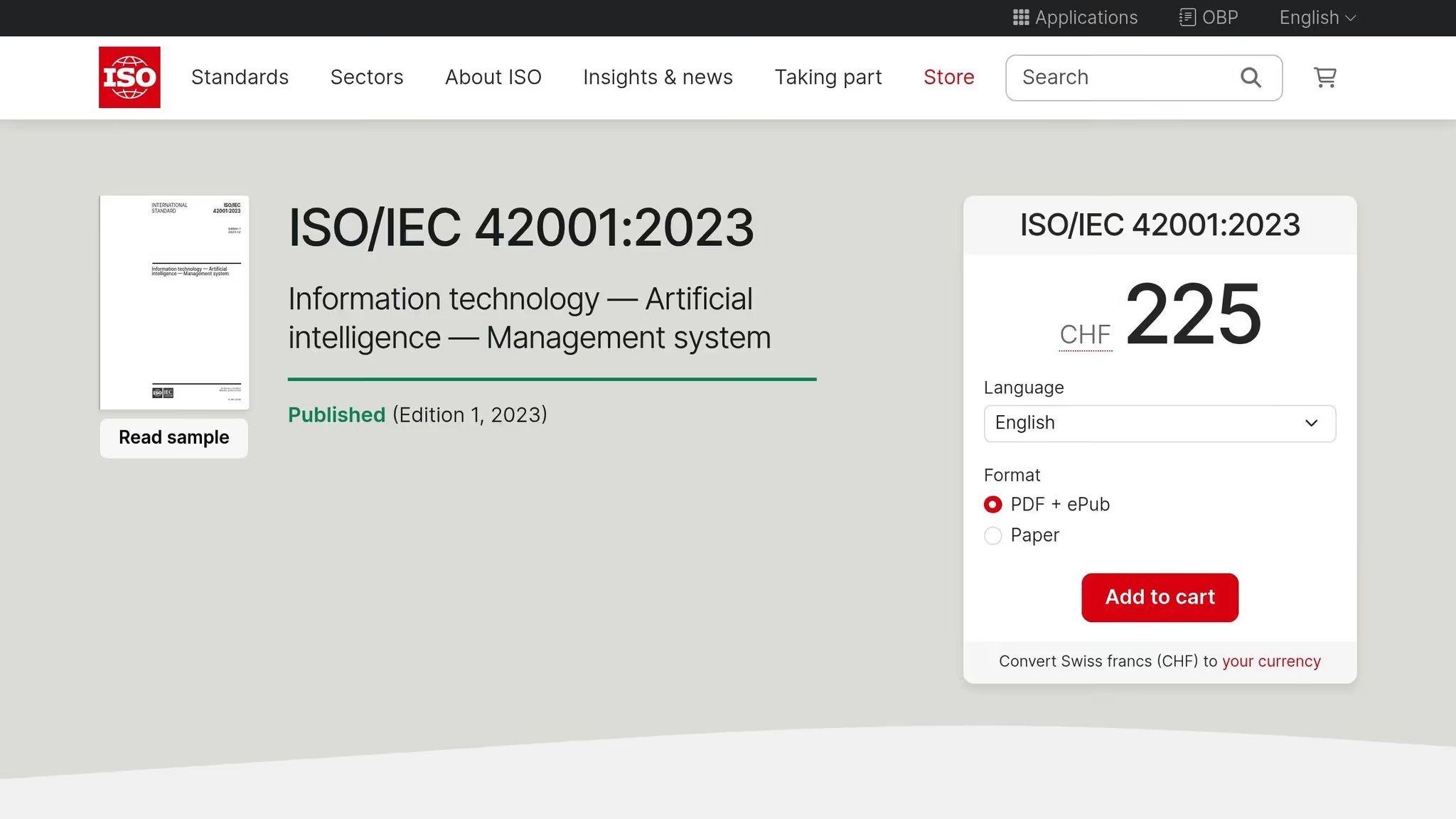
Speaking of costs, the financial commitment can vary significantly based on your organization's size and scope. Expect to budget for the standard document (approximately $265 USD), auditor fees, internal labor, and possibly consulting services. Keep in mind that ongoing surveillance audits, which account for 20% to 30% of your initial certification fee, are part of maintaining compliance over time. If your organization already follows ISO 27001, you can leverage existing work to minimize duplication and streamline the process.
Preparation is just as important as budgeting when it comes to achieving certification. A well-thought-out approach can save you from unnecessary delays and frustrations. Start with a comprehensive gap analysis to pinpoint missing policies and controls before beginning the formal audit. Securing management buy-in early is crucial, as top leadership involvement is a requirement under Clause 5. Don’t overlook the internal audit - it’s mandatory before you can even proceed to your Stage 1 audit.
Interestingly, only 37% of organizations currently perform regular AI risk assessments, meaning many are starting this process from scratch. This is where automation tools and expert guidance can significantly ease the burden. Compliance platforms can handle 80% to 90% of the manual work involved in ISO 42001 certification, allowing your team to focus on bigger-picture strategies rather than getting bogged down in paperwork. Think of certification as an ongoing investment in your organization's future.
FAQs
What are the key benefits of getting ISO 42001 certification?
ISO 42001 certification offers organizations a structured way to manage artificial intelligence (AI) systems responsibly. It provides a framework to tackle challenges like ethics, transparency, and risk. By adopting an Artificial Intelligence Management System (AIMS) that aligns with this standard, companies can show a clear commitment to responsible AI development and deployment while continuously refining their processes.
Earning this certification helps build trust with customers, regulators, and stakeholders. It demonstrates that your organization is actively working to minimize bias, safeguard data, and uphold accountability. Beyond trust, it can set your business apart, create opportunities for partnerships, lower legal risks, and ensure compliance with emerging AI regulations.
ISO 42001 also connects your organization to globally recognized best practices, making it simpler to incorporate AI governance into existing compliance efforts. This structured approach reduces uncertainty, simplifies audits, and supports safer, more efficient innovation - providing a competitive advantage in the ever-evolving AI landscape.
How can small businesses speed up the ISO 42001 certification process?
Small businesses aiming for ISO 42001 certification can make the process more efficient by focusing on preparation and using automation tools. A good starting point is conducting an internal gap analysis. Use a detailed checklist to pinpoint missing policies or evidence. It’s also smart to document existing AI-risk and data-privacy controls early on - being well-prepared for audits can significantly cut down on delays.
Automation can be a game-changer here. Compliance platforms can automatically gather data from your systems, map it to audit requirements, and create progress reports. This approach reduces manual effort and minimizes the back-and-forth communication often involved in the process. Assigning clear tasks, setting deadlines, and keeping everyone on the same page helps ensure smoother teamwork and quicker approvals.
For trickier areas, bringing in a consultant can be a wise move. They can assist with drafting policies or even conduct a mock audit to identify potential gaps. With solid preparation, smart use of automation, and expert support, most small businesses can achieve certification within six to twelve months - often leaning toward the shorter end of that timeline.
What are the biggest challenges in staying compliant with ISO 42001?
Staying on top of ISO 42001 compliance can feel like a moving target, especially with the rapid evolution of AI technology and the standard's strict demands. Organizations need to keep their policies current, closely monitor their practices, and tackle emerging ethical challenges as AI models and applications continue to evolve. Striking the right balance between innovation and effective governance is key to keeping AI decisions both transparent and accountable.
Because ISO 42001 is still relatively new, many companies find themselves without the in-house expertise to navigate it effectively. This often means investing in specialized training and tools to bridge the gap. Regular AI risk assessments, thorough documentation updates, and aligning ISO 42001 efforts with other management systems - like those for information security or quality management - require a coordinated, ongoing effort. Building a solid governance framework and keeping a close watch on AI risks are essential steps for staying compliant in the long run.
Related Blog Posts
- 5 Common ISO 27001 Compliance Mistakes to Avoid
- SOC2 Gap Analysis vs. ISO27001 Pre-Assessment
- SOC 2 vs ISO 27001: Documentation Reuse Guide
- Cycore Now Supports ISO 42001 Compliance with Drata
{"@context":"https://schema.org","@type":"FAQPage","mainEntity":[{"@type":"Question","name":"What are the key benefits of getting ISO 42001 certification?","acceptedAnswer":{"@type":"Answer","text":"<p>ISO 42001 certification offers organizations a structured way to manage artificial intelligence (AI) systems responsibly. It provides a framework to tackle challenges like ethics, transparency, and risk. By adopting an Artificial Intelligence Management System (AIMS) that aligns with this standard, companies can show a clear commitment to responsible AI development and deployment while continuously refining their processes.</p> <p>Earning this certification helps build trust with customers, regulators, and stakeholders. It demonstrates that your organization is actively working to minimize bias, safeguard data, and uphold accountability. Beyond trust, it can set your business apart, create opportunities for partnerships, lower legal risks, and ensure compliance with emerging AI regulations.</p> <p>ISO 42001 also connects your organization to globally recognized best practices, making it simpler to incorporate AI governance into existing compliance efforts. This structured approach reduces uncertainty, simplifies audits, and supports safer, more efficient innovation - providing a competitive advantage in the ever-evolving AI landscape.</p>"}},{"@type":"Question","name":"How can small businesses speed up the ISO 42001 certification process?","acceptedAnswer":{"@type":"Answer","text":"<p>Small businesses aiming for ISO 42001 certification can make the process more efficient by focusing on preparation and using automation tools. A good starting point is conducting an internal gap analysis. Use a detailed checklist to pinpoint missing policies or evidence. It’s also smart to document existing AI-risk and data-privacy controls early on - being well-prepared for audits can significantly cut down on delays.</p> <p>Automation can be a game-changer here. Compliance platforms can automatically gather data from your systems, map it to audit requirements, and create progress reports. This approach reduces manual effort and minimizes the back-and-forth communication often involved in the process. Assigning clear tasks, setting deadlines, and keeping everyone on the same page helps ensure smoother teamwork and quicker approvals.</p> <p>For trickier areas, bringing in a consultant can be a wise move. They can assist with drafting policies or even conduct a mock audit to identify potential gaps. With solid preparation, smart use of automation, and expert support, most small businesses can achieve certification within six to twelve months - often leaning toward the shorter end of that timeline.</p>"}},{"@type":"Question","name":"What are the biggest challenges in staying compliant with ISO 42001?","acceptedAnswer":{"@type":"Answer","text":"<p>Staying on top of ISO 42001 compliance can feel like a moving target, especially with the rapid evolution of AI technology and the standard's strict demands. Organizations need to keep their policies current, closely monitor their practices, and tackle emerging ethical challenges as AI models and applications continue to evolve. Striking the right balance between innovation and effective governance is key to keeping AI decisions both transparent and accountable.</p> <p>Because ISO 42001 is still relatively new, many companies find themselves without the in-house expertise to navigate it effectively. This often means investing in specialized training and tools to bridge the gap. Regular AI risk assessments, thorough documentation updates, and aligning ISO 42001 efforts with other management systems - like those for information security or quality management - require a coordinated, ongoing effort. Building a solid governance framework and keeping a close watch on AI risks are essential steps for staying compliant in the long run.</p>"}}]}