Vanta vs Delve: Feature-by-Feature Comparison

Vanta and Delve are compliance management platforms designed to help businesses meet requirements such as SOC 2, ISO 27001, GDPR, and HIPAA. Both automate parts of compliance, but they differ in approach and target audience. Since we first published this comparison, one more question has become part of the evaluation: how well does the platform's evidence and audit process hold up when someone checks it?
Quick Comparison
| Feature | Vanta | Delve |
|---|---|---|
| Frameworks | 35+ frameworks | SOC 2 Type I and II, HIPAA, GDPR, PCI DSS, ISO 27001, ISO 42001, HITRUST, FedRAMP, EU AI Act, NIST AI RMF, CCPA, plus additional support |
| Setup | Varies by scope, integrations, and framework. Vanta does not publish one universal onboarding-hour figure. | Varies by framework. See Delve's current published timing below. |
| Integrations | 400+ integrations | Major cloud platforms and business applications |
| Pricing | Custom quote. Confirm platform, framework, add-on, support, and audit costs separately. | Custom proposal based on company size, frameworks, and services. Confirm audit scope and fees in writing. |
| Best fit | Larger, multi-framework programs that need broad integrations and continuous monitoring | Smaller teams prioritizing faster setup and hands-on support, subject to framework and audit requirements |
Vanta fits larger, multi-framework programs that need broad integrations and continuous monitoring. Delve emphasizes faster setup and hands-on support for smaller teams. In either case, the platform organizes evidence. It does not replace the independent auditor or the person inside your company who owns the compliance program.
What Changed Since We Published This
In March 2026, TechCrunch reported allegations concerning whether some Delve evidence and audit materials accurately reflected the underlying testing. Delve denies the allegations. The company says it does not issue audit reports or certifications and that independent licensed firms issue those opinions. Delve also says customers may choose their own auditor or use one from its network.
Delve later announced additional customer measures, including access to engagement letters, direct auditor communications, and a complimentary re-audit for customers who request one. Cycore takes no position on unresolved allegations. We include the issue because buyers need to understand where the platform's evidence work ends and the independent auditor's work begins.
Vanta Platform Details

Vanta is built for organizations managing multiple frameworks, large integration environments, and continuous control monitoring. Vanta currently says it supports 35+ frameworks, 400+ integrations, and more than 1,400 automated tests that run hourly.
Vanta now positions the product as an Agentic Trust Platform combining compliance, risk, proof, security questionnaires, Trust Centers, and Vanta AI Agent workflows. Capabilities vary by plan. Vanta does not publish a universal onboarding-hour figure or public standard pricing. Buyers should request a written quote that separates the platform subscription, frameworks, add-ons, support, and audit costs.
Delve Platform Details
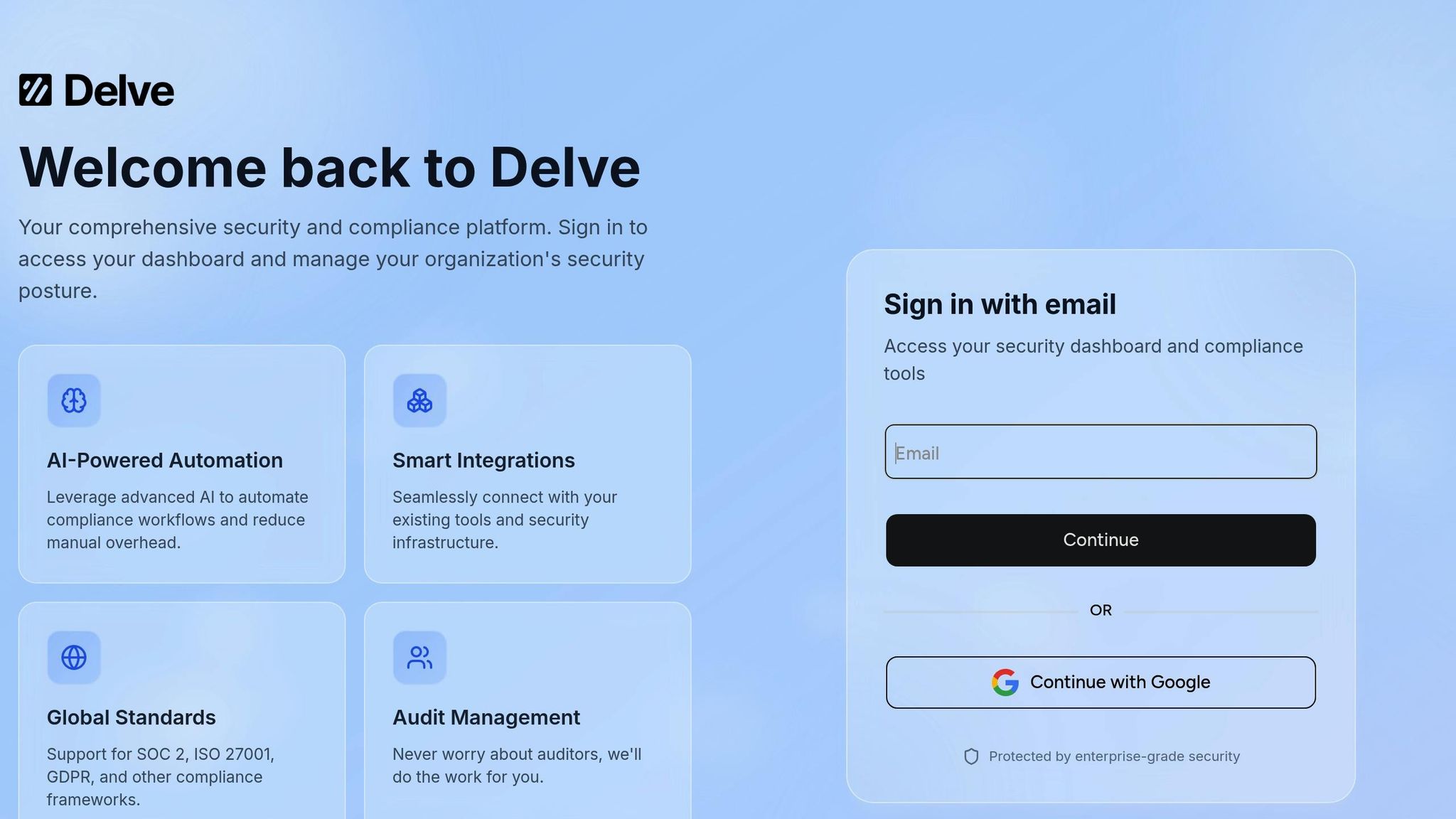
Delve positions itself for teams seeking faster onboarding and hands-on support. Its current public site names SOC 2 Type I and II, HIPAA, GDPR, PCI DSS, ISO 27001, ISO 42001, HITRUST, FedRAMP, the EU AI Act, NIST AI RMF, CCPA, and additional support.
Delve advertises white-glove onboarding, 1:1 Slack support with compliance experts, dedicated compliance support, audit management where applicable, and a Trust Report. Delve does not publish one universal price. Its site directs buyers to a customized proposal based on the company, frameworks, and services.
Delve says it does not issue audit reports or certifications. Its published position is that independent licensed firms issue the reports, and customers may choose their own auditor or work with one from Delve's network.
Framework-Specific Delve Timing
Delve's own pages describe different paths by framework. The timelines below are Delve's vendor claims, not measured outcomes.
| Framework | Delve's current published timing |
|---|---|
| SOC 2 Type I | 30-minute onboarding, 10 to 15 hours platform setup, and a stated 1-to-3-week audit |
| SOC 2 Type II | The same onboarding and setup, plus a three-month observation period and a stated 1-to-3-week audit |
| HIPAA | 30-minute onboarding and 10 to 15 hours platform setup |
| GDPR | 30-minute onboarding and 10 to 15 hours platform setup |
| ISO 27001 | 30-minute onboarding, 10 to 15 hours gap analysis and ISMS work, 1 to 2 weeks platform setup, and a stated 1-to-3-week audit |
| ISO 42001 | 30-minute onboarding, 10 to 15 hours gap analysis and AIMS work, 1 to 2 weeks platform setup, and a stated 1-to-3-week audit |
Which Platform to Choose When
Best Cases for Vanta
Vanta is the stronger fit for larger, multi-framework programs that need broad integration coverage and continuous monitoring across a complex environment.
Best Cases for Delve
Delve is the stronger fit for smaller teams prioritizing faster setup and hands-on support, subject to their framework and audit requirements. Whichever platform you choose, the questions in the next section apply. They are the ones an enterprise customer will eventually ask you.
How to Check Whether Your Evidence Would Survive Scrutiny
This applies to any platform on this page, and to the ones that are not on it. A platform collects and organizes evidence. It does not issue the opinion. Knowing where that line sits in your own program is the difference between holding a certificate and being able to defend it.
Six questions are worth answering before your next audit cycle.
1. Who signs the opinion, and are they licensed or accredited?
For SOC 2, the report comes from a CPA firm. Ask for the firm's name and license number, then verify it with the state board. For ISO 27001, the certificate comes from a certification body accredited by a recognized accreditation service. That accreditation is public and checkable. If nobody can tell you which firm signed your report and under what authority, that is the first thing to fix.
2. Can you see the engagement letter?
The engagement letter names the auditor, scope, and period covered. It is your document. If the platform arranged the auditor, you should still be able to read it, and you should read it.
3. Does the evidence come from your systems, and can you reproduce it?
Pick five controls at random. Trace each piece of evidence back to the system that produced it, then generate it again yourself. If you cannot reproduce your evidence without the platform, you do not control your compliance program.
4. Which controls do you operate, and which do you only assert?
A trust page lists controls. Some are enforced by configuration. Others exist in a policy that nobody follows. Walk through your trust page line by line and mark which is which. The gap is the part a serious enterprise customer will find.
5. Can policies, mappings, evidence, and audit history be exported?
Ask for the export before you need it. Policies, control mappings, evidence artifacts, and audit history should be able to leave with you in a format another team or auditor can use.
6. What is the contingency if the platform's process is disputed during an audit or enterprise deal?
Know which customers would ask, what you would tell them, and how quickly you could arrange an independent re-examination. That means engaging a licensed firm directly, agreeing on the scope and period, and re-testing controls against evidence drawn from your systems.
If these questions are uncomfortable to answer, that is useful information. Most teams cannot answer them for the same reason. The platform was treated as the whole program, and nobody was assigned to own the work the platform does not do.
Using Compliance Tools with Outsourced GRC Services
These questions describe work that sits outside what any platform does. Someone still has to own it.
Vanta and Delve are both excellent tools for automating compliance, but many organizations find that pairing these platforms with outsourced GRC services creates a stronger compliance strategy. Instead of choosing between managing compliance internally or relying entirely on external help, this hybrid approach combines the best of both worlds. It fills operational gaps and ensures compliance efforts are reinforced at every stage.
Managing Vanta or Delve effectively at scale requires specialized expertise. Outsourced GRC providers bring deep knowledge of configuring these tools, managing integrations, and resolving technical issues. This ensures the platforms perform at their best without requiring in-house teams to become experts in platform management.
When it comes to audit preparation, external support can be a game-changer. While Vanta and Delve automate evidence collection, preparing for an audit involves more than just gathering data. It requires careful planning, identifying gaps, and addressing them proactively. GRC service providers can assist with pre-audit assessments and bring experienced professionals who understand exactly what auditors are looking for.
Ongoing compliance monitoring also benefits from external oversight. GRC providers can analyze the data generated by these platforms, spot trends that might signal emerging risks, and recommend proactive steps to address them. This level of analysis often goes beyond what internal teams can manage while juggling their primary responsibilities.
Organizations that adopt this combined approach often find it easier to scale their compliance programs efficiently. The tools handle routine tasks like evidence collection and monitoring, while external experts focus on strategic guidance, remediation, and audit preparation. This division of responsibilities allows internal teams to stay focused on their core business activities without compromising on compliance.
The hybrid model can also be more cost-effective. Instead of hiring full-time compliance specialists or relying on undertrained staff, organizations gain access to expert-level support through outsourced services. For example, Cycore's GRC Tool Administration offers professional management of platforms like Vanta and Delve as part of broader compliance programs, addressing the need for specialized support.
Another advantage of this approach is managing complex multi-framework requirements. Vanta and Delve can automate evidence collection for frameworks like SOC 2, ISO 27001, HIPAA, and GDPR. However, interpreting the results and planning strategic improvements requires a level of compliance expertise that external providers are well-equipped to deliver.
For organizations considering this strategy, the most important step is selecting GRC service providers with direct experience in your chosen compliance platform. Whether you're using Vanta or Delve, ensure your external partner understands the platform's features, limitations, and best practices for your industry and compliance needs.
FAQs
Q: How long does onboarding take with Vanta and Delve?
Vanta does not publish one universal onboarding-hour figure. The timeline depends on scope, frameworks, integrations, evidence gaps, and internal ownership. Delve publishes framework-specific estimates. It lists 10 to 15 hours of platform setup for SOC 2, HIPAA, and GDPR. ISO 27001 and ISO 42001 add 10 to 15 hours of gap analysis and 1 to 2 weeks of platform setup. Audit and observation periods are separate. Treat these as Delve's stated timelines, not guaranteed outcomes.
Q: What should we evaluate when choosing between Vanta and Delve?
Compare the frameworks you need, integration coverage, evidence ownership, audit independence, support terms, export options, and total written cost. Ask who signs the audit opinion, whether you can select the auditor, whether you can reproduce five controls from your own systems, and what happens to your evidence if you change platforms.
Q: How should we compare Vanta and Delve pricing?
Both require a current written quote. Ask each vendor to separate the platform subscription, frameworks, add-ons, support, audit or certification fees, penetration testing, questionnaires, Trust Center, and renewal terms. A low platform price is not the total cost if the audit, implementation, or required add-ons sit outside it.
Q: Is it still safe to use Delve for SOC 2 or ISO 27001?
Cycore does not tell clients to switch platforms over an unresolved dispute. We tell them to verify the audit trail independently. Get the name and license of the firm that signed the report, read the engagement letter, and confirm you can reproduce the evidence from your systems. That standard applies to every platform on this page. If you are a Delve customer and an enterprise buyer asks about the reporting, you should be able to answer with the auditor's name, license, and scope. If you cannot, start an independent examination before the question surfaces during a deal. Engage a licensed firm directly, agree on the scope and period, and re-test the controls against evidence drawn from your systems.
Q: How do I know my compliance platform's evidence is real?
Reproduce it. Pick five controls, trace each piece of evidence back to the system that produced it, and generate it again without the platform's help. Evidence you cannot reproduce is evidence you cannot defend. Then confirm that a licensed CPA firm signed the SOC 2 report, or that an accredited certification body issued the ISO certificate, and verify that authority with the issuing body.
Related Blog Posts
- Retail Compliance Tools: Drata vs Vanta
- Secureframe vs Thoropass: Feature-by-Feature Comparison
- Drata vs Thoropass: Feature-by-Feature Comparison
- Vanta vs Thoropass: Feature-by-Feature Comparison
- Top Vanta Alternatives
Send us your trust page and five controls. We will tell you which ones you can defend.