In 2025, the healthcare sector in the U.S. experienced a sharp rise in data breaches, exposing millions of patient records and disrupting critical operations. These incidents highlighted vulnerabilities in outdated systems, weak vendor security, and poor compliance practices. Attackers exploited gaps like unpatched software, stolen credentials, and misconfigured systems, often targeting third-party vendors to gain access.
Key Takeaways:
- Major Breaches: High-profile incidents included a server breach at Yale New Haven Health Network, a ransomware attack on a multi-hospital system, and a billing vendor compromise affecting multiple organizations.
- Causes: Weak access controls, poor vendor oversight, and delayed patching were common factors.
- Impact: Breaches led to operational disruptions, delayed treatments, and loss of patient trust.
To prevent future breaches, healthcare organizations must improve identity management, vendor oversight, patching processes, and network segmentation while ensuring compliance with data protection regulations.
The Biggest Healthcare Data Breaches of 2025
The year 2025 saw a surge in cyberattacks targeting the healthcare sector, exposing critical weaknesses in cybersecurity measures. Here are some of the most impactful breaches that highlighted the fragility of healthcare data systems.
Yale New Haven Health Network: Server Breach
Yale New Haven Health Network experienced a breach when unauthorized individuals accessed its internal servers, compromising a vast number of patient records. The aftermath included hefty costs for damage control and a federal investigation by the Department of Health and Human Services Office for Civil Rights. The inquiry raised questions about the organization’s encryption standards and monitoring of access points. The breach disrupted daily operations, forcing some facilities to temporarily rely on paper-based systems. This not only slowed processes but also eroded patient confidence in the network’s ability to safeguard sensitive information.
Multi-Hospital Ransomware Attack
A coordinated ransomware attack on a multi-hospital system in the Midwest underscored the dangers of sophisticated malware. The attackers encrypted essential systems, including electronic health records and pharmacy databases, crippling operations across several states. Refusing to pay the ransom, the hospital system focused on restoring services from backups, which significantly delayed recovery. The disruption led to emergency services being rerouted, elective procedures postponed, and numerous appointments either canceled or rescheduled. Investigations revealed that the attackers had infiltrated the network long before deploying the ransomware, exposing gaps in threat detection and network monitoring.
Third-Party Vendor Breach
A breach at a major billing services vendor sent shockwaves through the healthcare industry, illustrating the risks posed by third-party vulnerabilities. Hackers exploited a flaw in the vendor's web application to access databases containing sensitive patient financial and medical data. The breach was exacerbated by the vendor’s failure to apply a known security patch in a timely manner. As a result, several healthcare organizations severed ties with the vendor, and regulatory bodies launched investigations into its data protection protocols. This incident highlighted the ripple effects that vendor negligence can have on the entire healthcare ecosystem.
What Caused These Breaches
To understand why these breaches occurred, it's essential to look deeper than just the surface-level attacks. In 2025, the healthcare industry faced a perfect storm of outdated security measures, weak compliance oversight, and cybercriminals exploiting well-known vulnerabilities. These breaches weren’t just random incidents - they exposed deeper, systemic flaws. Let’s break down how attackers took advantage of these gaps.
How Attackers Got In
Cybercriminals primarily relied on two avenues: stolen credentials and unpatched vulnerabilities. Reused passwords and inconsistent use of multi-factor authentication (MFA) opened the door for many attacks. Stolen credentials - often purchased from dark web marketplaces or obtained through phishing schemes - were a common entry point. Once inside, attackers exploited unpatched vulnerabilities in remote access tools to maintain their foothold.
Misconfigurations were another major weak spot. Systems with overly permissive firewall rules or default database settings became easy targets for injection attacks and unauthorized access. Delays in applying security patches left systems running outdated, vulnerable software, giving attackers plenty of opportunities to exploit known weaknesses.
Where Compliance Failed
While technical vulnerabilities created entry points, failures in compliance made it easier for attackers to succeed. Many organizations performed only surface-level risk assessments under HIPAA’s Security Rule, missing critical vulnerabilities that could have been addressed proactively.
Weak access controls and poor audit logging compounded the issue. Without strict role-based access, employees often had access to more data than necessary, increasing the damage when credentials were compromised. On top of that, many systems lacked centralized monitoring, and logs were stored in formats that were difficult to analyze. This allowed attackers to operate undetected for long periods.
Third-party vendor management was another glaring issue. Many healthcare providers treated vendor compliance as a box-checking exercise, rarely scrutinizing their partners’ security practices beyond the initial contract phase.
International compliance standards also revealed gaps. Organizations handling European patient data often failed to implement data protection by design or meet the GDPR’s 72-hour breach notification requirement. Similarly, lapses in maintaining HITRUST framework standards highlighted that earning certification wasn’t enough - continuous evaluation and improvement were necessary but often overlooked.
Encryption practices were another weak link. Data encryption was inconsistent - some systems lacked encryption at rest, others failed to encrypt data in transit, and poor key management practices left sensitive information vulnerable. In many cases, encryption offered only minimal protection against determined attackers.
These systemic failings highlight the pressing need for stronger third-party oversight and more robust compliance measures, topics we’ll explore in the next section.
Improving Third-Party Vendor Oversight
The healthcare breaches of 2025 sent a clear message: relying on one-time vendor checks is no longer enough. Healthcare organizations need to shift from occasional reviews to active, ongoing oversight to spot and address vendor risks before they escalate into breaches.
Third-party vendors often have access to highly sensitive data. Yet, many healthcare organizations limit their scrutiny to the initial contract phase, leaving them vulnerable to evolving threats or lapses in security practices that can go unnoticed for months - or even years.
Best Practices for Vendor Risk Management
To effectively manage vendor risks, healthcare organizations need to go beyond the basics. Start by conducting a detailed risk assessment for each vendor. This should account for the level of access they have, the type of data they handle, and their overall security posture. Not all vendors pose the same risk - a vendor with limited, read-only access to anonymized data requires less oversight than one actively handling protected health information (PHI).
Standardize security requirements for all vendors and business associates. Establish a baseline set of controls, including encryption standards, access management, logging practices, and incident response protocols. These requirements should be clearly outlined in contracts, along with provisions for auditing vendor security practices. Vendor attestations should be backed by independent certifications like SOC 2, ISO 27001, or HITRUST.
One of the most overlooked areas is continuous monitoring. Security environments are constantly changing - vendors update systems, face new threats, and may experience incidents. Conduct quarterly security reviews for high-risk vendors and annual reviews for lower-risk ones. These reviews should include updated security questionnaires, verification of certifications, and a review of any recent security events.
Pay close attention to access management and data flow mapping. Document what data each vendor can access, how it is transmitted, where it is stored, and who within the vendor's organization has access. This level of detail is vital during breach investigations and provides a clearer picture of your overall exposure. Vendors should also notify you immediately of any changes to their data handling practices or security measures.
Develop a vendor incident response protocol that outlines how vendors should report security incidents, what details they must provide, and what steps they need to take to resolve the issue. While the GDPR's 72-hour notification rule is a good starting point, many healthcare organizations now require notification within 24 hours for any suspected PHI exposure.
Where possible, implement automated compliance monitoring tools. Relying on manual spreadsheets to track certifications and reviews can lead to gaps and inefficiencies. Automated tools can track certification expirations, initiate review workflows, and maintain a centralized repository of vendor security documentation.
Finally, don't forget about subcontractor oversight. Many vendors use third-party providers themselves, creating additional layers of risk. Require vendors to disclose all subcontractors with access to your data and ensure those subcontractors meet the same security standards as your direct vendors.
By adopting these measures, healthcare organizations can address the vulnerabilities that contributed to the 2025 breaches.
How Cycore Supports Vendor Compliance
This is where Cycore comes in - helping healthcare organizations manage vendor compliance with efficiency and expertise.
Vendor oversight demands resources and skills that many healthcare organizations struggle to maintain internally. Cycore steps in as your fractional security and compliance team, taking on the heavy lifting of vendor management so your internal teams can focus on patient care and other priorities.
Cycore doesn’t just track vendor compliance tasks - it works alongside your team to design and execute a vendor risk management program tailored to your needs. This includes conducting initial vendor risk assessments, establishing standardized security requirements aligned with frameworks like HIPAA, GDPR, and HITRUST, and implementing ongoing monitoring processes that actually get done.
Their approach combines AI-powered automation with human expertise. AI tools handle tasks like collecting vendor security documentation, tracking certification expirations, and flagging gaps in compliance. Meanwhile, Cycore’s experts assess vendor security, identify risks, and recommend specific fixes.
When vendors submit security questionnaires or attestations, Cycore reviews them against your requirements and industry standards. If there are gaps, Cycore works directly with the vendors to address them, managing communication and ensuring the necessary controls are implemented - not just promised.
For organizations preparing for audits, Cycore takes care of vendor compliance evidence collection. They gather everything from Business Associate Agreements (BAAs) to security certifications, penetration test reports, and vendor review documentation. All of this is organized in audit-ready formats, eliminating the last-minute rush that can derail audit timelines.
Cycore also handles vendor incident response coordination. If a vendor experiences a security event, Cycore helps assess the impact, determine notification requirements under regulations like HIPAA, and coordinate remediation efforts. This quick response can make the difference between containing an issue and it escalating into a reportable breach.
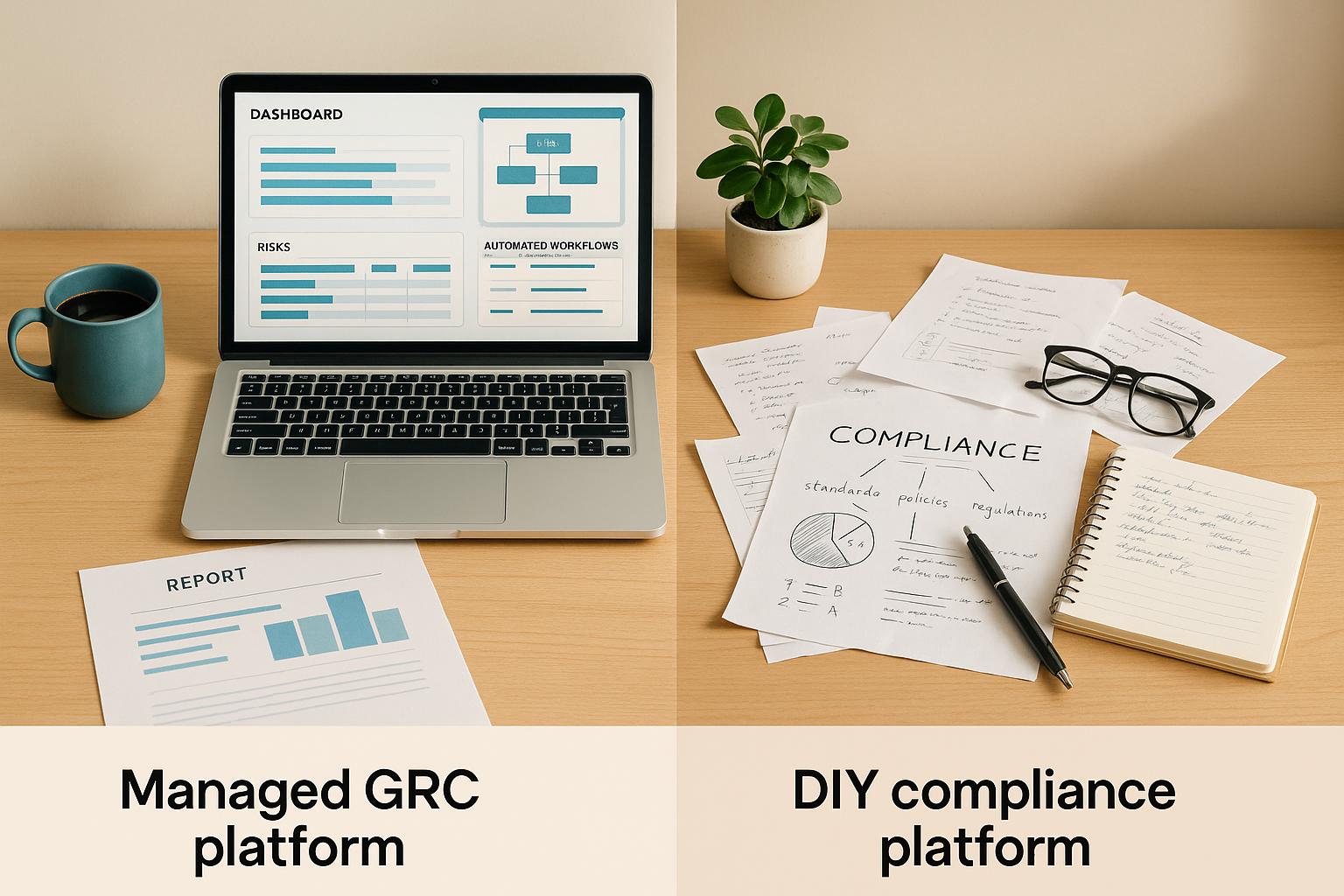
Cycore operates as a managed service for a fixed monthly fee, providing dedicated experts who become familiar with your organization and its vendor ecosystem. Instead of just offering software that still requires your team to do the work, Cycore delivers a full-service solution, saving countless hours of manual effort while ensuring your vendor risk management program meets the expectations of both regulators and enterprise customers.
sbb-itb-ec1727d
Lessons Learned and Next Steps for 2026
The healthcare data breaches of 2025 highlighted glaring security gaps that can no longer be ignored. Many of these incidents stemmed from preventable issues, such as outdated systems and poor vendor management. To address these vulnerabilities and strengthen defenses for 2026, organizations must take decisive action.
Security and Compliance Improvements to Make Now
Let’s start with identity and access management (IAM). Many breaches in 2025 occurred because of compromised credentials and unchecked access privileges. Implement multi-factor authentication (MFA) across all systems that handle protected health information (PHI) - not just for administrators, but for every user. Conduct quarterly reviews of user access, promptly removing unnecessary permissions and revoking access when employees change roles or leave.
Vendor access policies also need tightening. Vendors shouldn’t have permanent access to your production environments. Use just-in-time access provisioning, ensuring vendor access automatically expires within 24–48 hours. Log all vendor activity and review those logs regularly. If a vendor requires frequent access, it might be time to either bring that function in-house or introduce stricter monitoring measures.
Patch management continues to be a weak spot. The 2025 breaches revealed that attackers are still exploiting known vulnerabilities with available patches. Establish a formal patching process with clear timelines: apply critical patches within 72 hours, high-priority patches within two weeks, and all others within 30 days. When immediate patching isn’t feasible, implement compensatory measures like network segmentation or enhanced monitoring.
Speaking of network segmentation, it’s a must-have. Divide your network based on data sensitivity and function, restricting traffic between segments to only what’s necessary. For instance, medical devices, administrative systems, and guest Wi-Fi should operate on separate segments. This limits an attacker’s ability to move laterally if one part of your network is compromised.
Another critical step is to integrate incident response plans with patient safety protocols. Your response plan should ensure clinical operations continue during a cyber event. Include alternative workflows for system downtime and establish clear communication channels with clinical staff. Run tabletop exercises involving both IT and clinical leadership to prepare for scenarios like ransomware attacks on electronic health record systems or breaches affecting medication dispensing systems.
Data encryption is non-negotiable - whether data is at rest, in transit, or being processed. While encryption won’t stop a breach, it can significantly reduce the damage. Many of the 2025 breaches would have been less severe if data had been encrypted. Pay special attention to backups and archives, which often contain years of sensitive patient data and are frequently overlooked.
Finally, prioritize security awareness training that drives real change. Move beyond the standard annual training videos. Instead, offer ongoing, scenario-based training that helps staff recognize phishing attempts, report suspicious activity, and understand how security impacts patient safety. Make it relevant to their roles and measure its effectiveness through phishing simulations and incident metrics.
To implement these changes effectively, consider working with a partner that provides both expertise and resources.
How Cycore Helps Maintain Year-Round Compliance
Addressing these challenges requires more than just knowing what to do - it’s about having the capacity and expertise to execute. This is where Cycore steps in. Many healthcare IT teams are already stretched thin, balancing daily operations and patient care systems. Cycore acts as your fractional security, compliance, and privacy team, taking on the heavy lifting so your internal resources can focus on what they do best.
With Cycore’s year-round audit readiness, you won’t find yourself scrambling before an audit. They continuously collect evidence, maintain control documentation, and monitor for gaps across frameworks like HIPAA, HITRUST, SOC 2, and ISO 27001. By the time audit season arrives, everything is already organized for a seamless review, eliminating the usual pre-audit chaos.
For organizations juggling multiple compliance frameworks, Cycore simplifies the process by mapping overlapping requirements. For example, HIPAA and HITRUST share some similarities but also have differences. Cycore ensures you’re not duplicating efforts, allowing evidence from one audit to be reused where applicable.
Cycore’s approach combines AI-powered automation with human expertise. AI handles repetitive tasks like collecting system logs, tracking certification expirations, and generating compliance reports. Meanwhile, their security experts focus on strategic decisions, risk assessments, and complex judgment calls that require deep industry knowledge. This blend of technology and expertise ensures both efficiency and accuracy.
Beyond compliance, Cycore also manages operational security tasks that often overwhelm internal teams. From configuring access controls and reviewing security logs to updating policies and responding to security questionnaires, Cycore takes care of the essential but time-consuming work that can distract IT staff from supporting clinical operations.
For healthcare organizations experiencing rapid growth - whether through mergers, new services, or geographic expansion - Cycore offers scalable compliance solutions without the delays and costs of building an internal team. Their dedicated experts learn your environment and integrate seamlessly as an extension of your team. All of this is provided for a fixed monthly fee, making it a cost-effective alternative to hiring full-time staff.
This partnership enables you to maintain a robust security program without slowing down business objectives. Whether pursuing enterprise contracts, entering regulated markets, or maintaining certifications, Cycore ensures compliance is never a roadblock - allowing your team to stay focused on patient care and operational excellence.
Conclusion: Building Better Healthcare Security
The healthcare breaches of 2025 served as stark reminders of vulnerabilities that had been ignored for far too long. Outdated systems, poor vendor oversight, and weak access controls opened the door for attackers, compromising millions of patient records.
Our breach analysis makes one thing clear: a reactive approach to security doesn’t cut it anymore. Attackers are becoming more sophisticated, targeting not just internal systems but also vendors, supply chains, and any other weak link they can exploit. Healthcare organizations must stop viewing compliance as a mere checkbox activity or treating security as an afterthought.
Third-party risk management is a critical area that demands immediate attention. Many of the breaches in 2025 stemmed from vendors with excessive access, outdated security measures, or poorly maintained systems. If you’re not actively monitoring your vendors’ security practices, reviewing their access permissions, and enforcing strict, time-limited access controls, you’re leaving your organization exposed. Remember, your data is only as secure as the weakest link in your vendor network.
To build stronger defenses, focus on proven strategies: implement multi-factor authentication, patch critical vulnerabilities within 72 hours, segment your network, encrypt sensitive data, and provide ongoing staff training. These measures work, but only when executed consistently and with proper oversight.
However, healthcare IT teams already face immense pressure managing critical operations, and adding comprehensive security and compliance tasks to their workload is a tall order.
That’s where the right partnership can make all the difference. Cycore steps in as your fractional security, compliance, and privacy team. From continuous evidence collection to vendor risk assessments and audit preparation, Cycore handles these tasks for a fixed monthly fee, allowing your team to focus on patient care and other priorities.
Security and compliance aren’t just about avoiding fines - they’re about protecting patient trust, ensuring operational continuity, and supporting long-term growth. As you look ahead to 2026, make these areas a strategic priority. With the right tools, strategies, and support, your organization can create a robust security program that safeguards what matters most: your patients and their trust. Start now to secure your future.
FAQs
How can healthcare organizations strengthen vendor oversight to prevent data breaches?
Healthcare organizations can strengthen their oversight of vendors by adopting a vendor risk management program. This program should include regular security evaluations and ongoing monitoring of third-party partners. It's also essential to require vendors to demonstrate compliance with critical cybersecurity standards like HIPAA or HITRUST. Requesting detailed documentation, such as software bills of materials (SBOMs), can help pinpoint potential vulnerabilities in their systems.
To go a step further, organizations should perform periodic penetration tests and audits to uncover any weaknesses in third-party systems. Open communication with vendors about security expectations and collaborative efforts to address risks can play a significant role in minimizing threats and avoiding breaches.
What steps can healthcare providers take to comply with data protection regulations and prevent breaches like those in 2025?
Healthcare providers can better protect sensitive data by gaining a clear understanding of their data environment and adopting effective security practices. This involves steps like implementing encryption, performing regular vulnerability assessments, and establishing solid vendor risk management protocols. Following established guidelines, such as the NIST Cybersecurity Framework, HIPAA regulations, and HHS Cybersecurity Performance Goals, is crucial to staying compliant and safeguarding patient information.
Equally important is ongoing staff training to minimize the risk of human errors that could lead to breaches. Enhancing oversight of third-party vendors and utilizing compliance tools can further support efforts to monitor and secure critical data. By staying proactive, healthcare providers can better defend against the ever-changing landscape of cybersecurity threats.
What key steps can healthcare organizations take to protect patient data from advanced cyber threats?
To protect patient data from modern cyber threats, prioritize multi-factor authentication, encryption (both in storage and during transfer), and routine software and system updates to patch vulnerabilities. Enhance your defenses by performing regular risk assessments, enforcing strict access controls, and ensuring third-party vendors comply with strong security protocols.
Incorporating industry best practices, like the NIST Cybersecurity Framework, can help create a more proactive security strategy. Pair these efforts with continuous staff training and vigilant monitoring to lower the risk of breaches and safeguard sensitive healthcare information effectively.